
Last updated September 25, 2026
ADU Design & Permitting Maintenance Checklist for Lancaster Homeowners
A Lancaster homeowner recently lost $31,000 in a refinance appraisal when their ADU was flagged as unpermitted. The certificate of occupancy existed in their filing cabinet. The final inspection card had never transferred to the Los Angeles County Assessor’s office. The structure was legal. The record was broken. This guide shows Lancaster ADU owners how to prevent that gap, maintain the permit package as a living asset, and keep the documentation current for every future sale, refinance, insurance claim, or tenant dispute. For professional support, explore our ADU Design & Permitting services. You’ll learn the exact documents to hold, the annual maintenance specific to our high-desert climate, and how to audit your record against LA County’s digital files.
Quick Answer
Lancaster ADU owners should maintain four critical documents after certificate of occupancy: the stamped permit set, final inspection sign-off, certificate of occupancy, and confirmed assessor parcel update. Annual maintenance must address UV degradation on roofing membranes, HVAC filter replacement in high-particulate desert air, and stucco inspection after wind events. Verify your permit record annually with LA County or the City of Lancaster planning department to catch gaps before they cost you at closing.
Table of Contents
- The Four Documents Every Lancaster ADU Owner Must Hold
- Annual Maintenance Checklist for Lancaster’s High-Desert Climate
- How to Audit Your Permit Record With LA County or City of Lancaster
- Pre-Listing and Pre-Refinance Documentation Checklist
- What Ellery Clients Receive: Haven Standard Post-Occupancy Documentation
- Prefab and Modular ADU Maintenance Considerations
- Common Mistakes to Avoid
- When to Call a Professional
- Frequently Asked Questions
The Four Documents Every Lancaster ADU Owner Must Hold
Most ADU checklists end at certificate of occupancy. That is where this one begins. The permit package you hold at project close is the legal DNA of your structure. Lenders, appraisers, insurers, and tenant attorneys will reference it for decades. Missing or inconsistent records trigger re-inspections, appraisal write-downs, or coverage denials.
Here are the four documents, what each proves, and where the gaps typically form in Lancaster’s permitting environment.
1. Stamped Permit Set
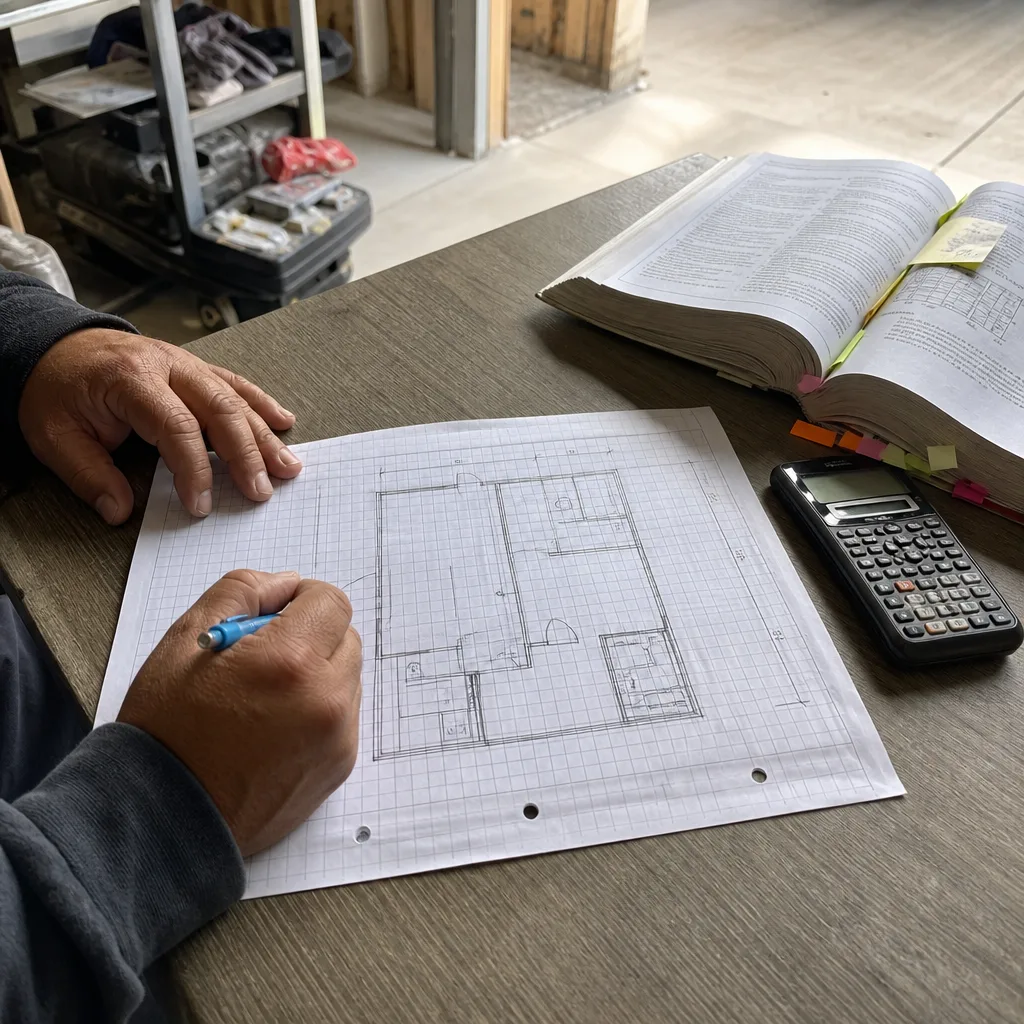
This is the architectural and engineering drawing package approved by the City of Lancaster or LA County, bearing the plan check stamp and approval date. It shows exactly what was approved to be built: footprint, setbacks, ceiling heights, egress windows, electrical panel location, plumbing fixtures.
What to verify: The stamp date matches your construction start window. In Lancaster, approved plans expire if construction does not begin within 180 days of issuance, with one extension available. An expired permit set is not a valid legal reference.
Where gaps form: Design-build contractors who treat the permit set as a means to an end sometimes deliver only the construction set, not the approved plan check version with city stamps. The stamped set is what appraisers and lenders request.
Storage protocol: Keep the original in a fireproof container. Maintain a scanned copy in cloud storage with file naming that includes the permit number and approval date.
2. Final Inspection Sign-Off Card
This card, signed by the City of Lancaster building inspector or LA County inspector, confirms that every required inspection passed: foundation, framing, insulation, electrical, plumbing, mechanical, and final. Each line should have a signature, date, and inspector ID.
What to verify: Every inspection line is filled. Partial sign-offs happen when a contractor rushes closeout or an inspector misses a return visit. A blank line for “final mechanical” means your HVAC was never verified.
Where gaps form: The ADU Warning Signs: A Lancaster Homeowner’s Reference Guide case we opened with started here. The final inspection card existed in the homeowner’s file but was never transmitted to the County Assessor’s office. The building department considered the ADU complete. The assessor’s parcel record showed only the original single-family residence.
3. Certificate of Occupancy (CO)
The CO is the city’s formal declaration that the ADU is safe to inhabit. In Lancaster, this is issued by the Building & Safety Division after final inspection clearance. For ADUs permitted through LA County (unincorporated areas near Lancaster city limits), the equivalent is the Certificate of Completion.
What to verify: The address on the CO matches your property exactly, including unit designation if applicable. The use type reads “Accessory Dwelling Unit” or “JADU,” not “storage” or “garage.” Errors here create title insurance exceptions.
4. Assessor’s Updated Parcel Data Confirmation
This is the document most homeowners never request and most contractors never mention. It is not issued at construction closeout. You must verify it separately, typically 60-90 days after CO issuance.
How to obtain: Contact the LA County Assessor’s office with your APN (Assessor’s Parcel Number). Request a copy of the current parcel record. Confirm the ADU square footage, bedroom count, and unit type appear. In Lancaster city limits, verify with the City Clerk that the building division’s final data was transmitted to County records.
Why this matters for refinancing: Automated valuation models (AVMs) and appraisers pull from assessor data. If the ADU is absent, your loan-to-value ratio is calculated on the original structure only. That $31,000 loss came from a $380,000 appraisal dropping to $349,000 when the ADU square footage was excluded.
Annual Maintenance Checklist for Lancaster’s High-Desert Climate
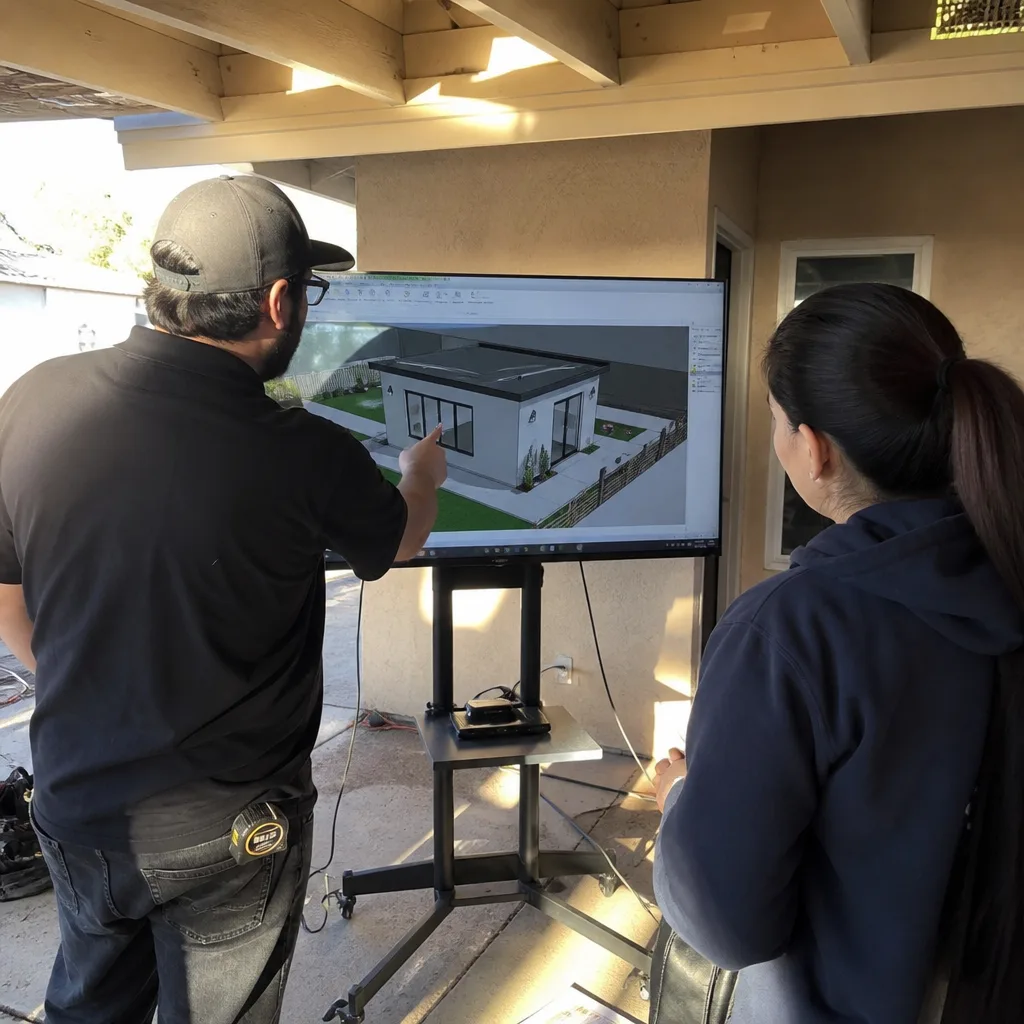
Lancaster’s climate imposes specific maintenance demands that coastal ADU owners never face. Antelope Valley receives 280+ days of annual sunshine, summer temperatures exceeding 110°F, sustained winds above 25 mph during spring Santa Ana events, and fine particulate dust that infiltrates every mechanical system. These conditions degrade materials faster and create maintenance categories that generic checklists omit.
Roofing Membranes and UV Degradation
Flat or low-slope ADU roofs, common on garage conversions and modern detached units, rely on TPO, PVC, or modified bitumen membranes. Lancaster’s UV index averages 6.5 in winter and peaks above 11 in summer. At these levels, unprotected membrane chalking and embrittlement accelerate by 40% compared to Los Angeles Basin conditions.
Annual task: Inspect membrane surface for chalking (white residue when wiped), seam lifting, and penetration seal integrity. Check after August heat peaks. If your ADU uses a new detached ADU in Lancaster with a cool roof coating, verify the reflectance rating has not degraded below initial specification.
James Hardie siding note: For ADUs with fiber-cement cladding, annual inspection should include sealant joints at trim intersections. Hardie products are UV-stable, but the elastomeric sealant specified at installation is not. Re-caulk cycles in Lancaster run 5-7 years, shorter than the 10-year intervals typical in milder climates.
HVAC Filter and Coil Maintenance in High-Particulate Air
Lancaster’s PM10 particulate levels regularly exceed federal standards, driven by desert dust, agricultural activity, and the 14 Freeway corridor. Standard HVAC filter intervals assume moderate urban air quality. They fail here.
Annual task: Replace 1-inch pleated filters every 30-45 days during March through June (wind season) and September through November (harvest dust). Use MERV 11 minimum; MERV 13 if occupants have respiratory sensitivity. Never exceed MERV 13 without verifying your air handler’s fan capacity, as high-restriction filters can reduce airflow and freeze coils.
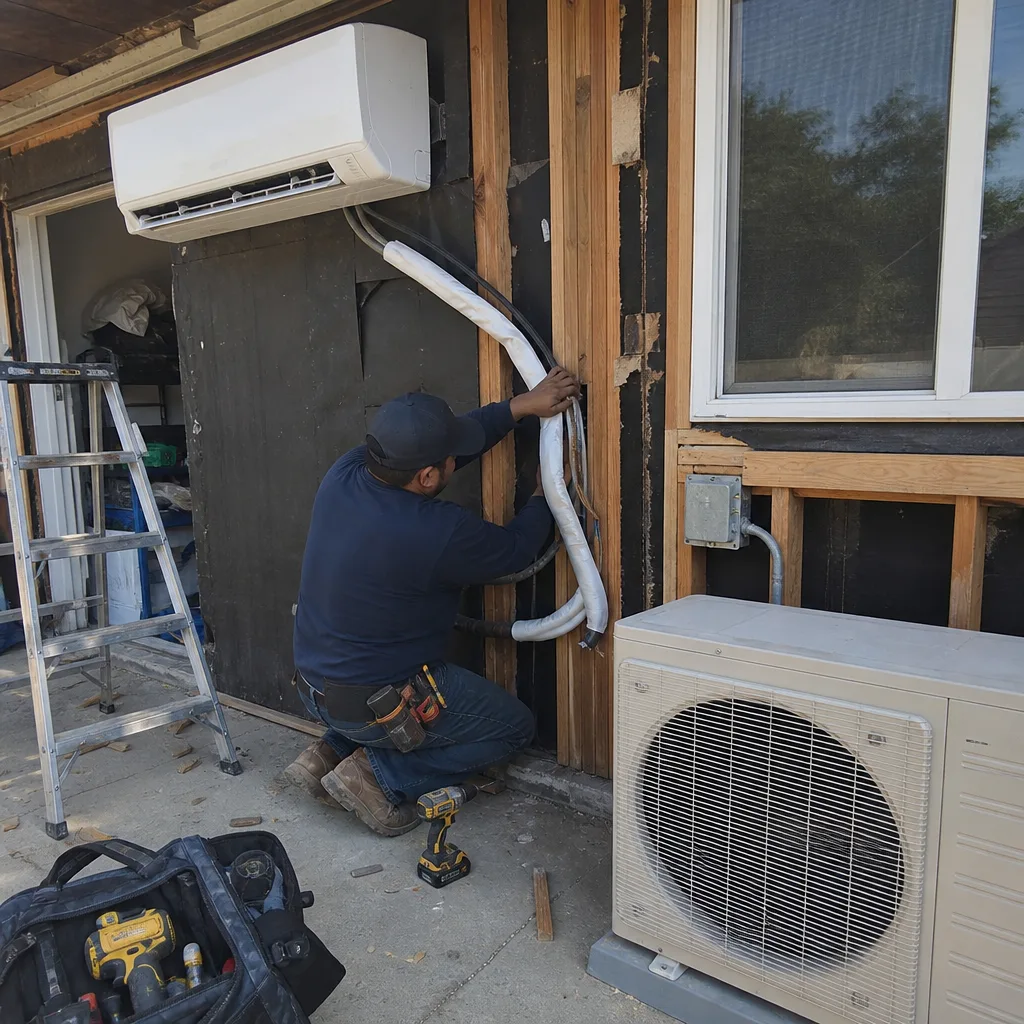
Coil inspection: Annual professional cleaning of evaporator and condenser coils. Dust accumulation on condenser fins in Lancaster reduces efficiency 15-25% in single seasons. For mini-split systems common in smaller ADUs, the outdoor unit must be positioned with adequate clearance from dust-collecting surfaces like unpaved ground or gravel.
Stucco and Exterior Seal Inspection After Wind Events
Lancaster’s spring wind events, particularly March through May, create cyclic loading on stucco surfaces. Hairline cracking is normal. Pattern cracking at corners, windows, or door headers indicates structural movement or inadequate lath fastening.
Annual task: Walk the exterior after each major wind event (sustained winds above 35 mph). Photograph cracks with a reference object for scale. Seal hairline cracks with elastomeric paint. Consult a structural observer if cracks exceed 1/16 inch or show stair-step patterns at openings.
Foundation perimeter: Check for soil erosion or settlement after wind-driven rain. Lancaster’s lean clay soils expand and contract with moisture changes. Maintain positive drainage away from the ADU foundation; even minor ponding creates slab edge distress in our soil conditions.
Plumbing and Irrigation Cross-Connection
ADUs with separate water meters require annual backflow preventer testing, per Lancaster’s cross-connection control program. ADUs on shared meters should verify that irrigation systems do not create back-siphonage risks. The City of Lancaster enforces backflow requirements for all new ADU connections; annual certification is the homeowner’s responsibility post-occupancy.
Window and Door Seal Integrity
Thermal cycling in Lancaster, with 40°F+ daily swings common in shoulder seasons, degrades weatherstripping faster than in coastal zones. Annual inspection of operable window and door seals prevents air infiltration that overloads HVAC systems and creates moisture condensation at interior corners.
How to Audit Your Permit Record With LA County or City of Lancaster
The digital permit record and your paper file can diverge. When they do, the digital record governs for refinancing, insurance, and resale. Here is how to audit and reconcile.
Step 1: Identify Your Permitting Authority
Lancaster city limits fall under City of Lancaster Building & Safety. Properties in unincorporated Antelope Valley areas near Lancaster, including parts of Quartz Hill and the Avenue L corridor, fall under LA County Building and Safety, Lancaster field office. Your property tax bill shows “City of Lancaster” or “Unincorporated Los Angeles County.” Start with the correct jurisdiction.
Step 2: Request a Permit History Report
City of Lancaster: Submit a records request through the Lancaster Permit Center or call the building division. Request a complete permit history for your APN, including all plan check numbers, issue dates, inspection dates, and final status.
LA County: Use the County’s online permit history tool or visit the Lancaster field office at 335A East Avenue K-6. Request the same complete history.
Step 3: Cross-Reference Against Your Paper File
Create a simple comparison table:
- Permit number: Digital record vs. your permit set cover sheet
- Issue date: Digital vs. stamped approval date
- Final inspection date: Digital vs. your inspection card
- CO/CC date: Digital vs. your certificate
- Square footage: Digital vs. your approved plans
- Unit type: Digital vs. your approved use designation
Any discrepancy is a problem to resolve, even if minor. A 20-square-foot variance between plans and assessor record can trigger an appraiser’s exclusion of the entire ADU.
Step 4: Request Correction When Records Diverge
If the digital record shows “open” or “pending” status for a permit you have a final CO for, submit a correction request with copies of your CO and final inspection card. The City of Lancaster typically resolves these within 10 business days. LA County may require 4-6 weeks.
If square footage or unit type is incorrect, you may need a permit amendment or assessor’s correction. This is where many homeowners discover they need professional help. ADU Design & Permitting in Lancaster includes post-occupancy record verification as part of our closeout protocol, but most contractors do not.
Step 5: Verify Assessor Integration
Contact the LA County Assessor’s office separately. Confirm they have received the final data from the permitting authority. Request a parcel profile printout. This step is not optional. The building department’s record and the assessor’s record are separate databases with separate update cycles.
Pre-Listing and Pre-Refinance Documentation Checklist
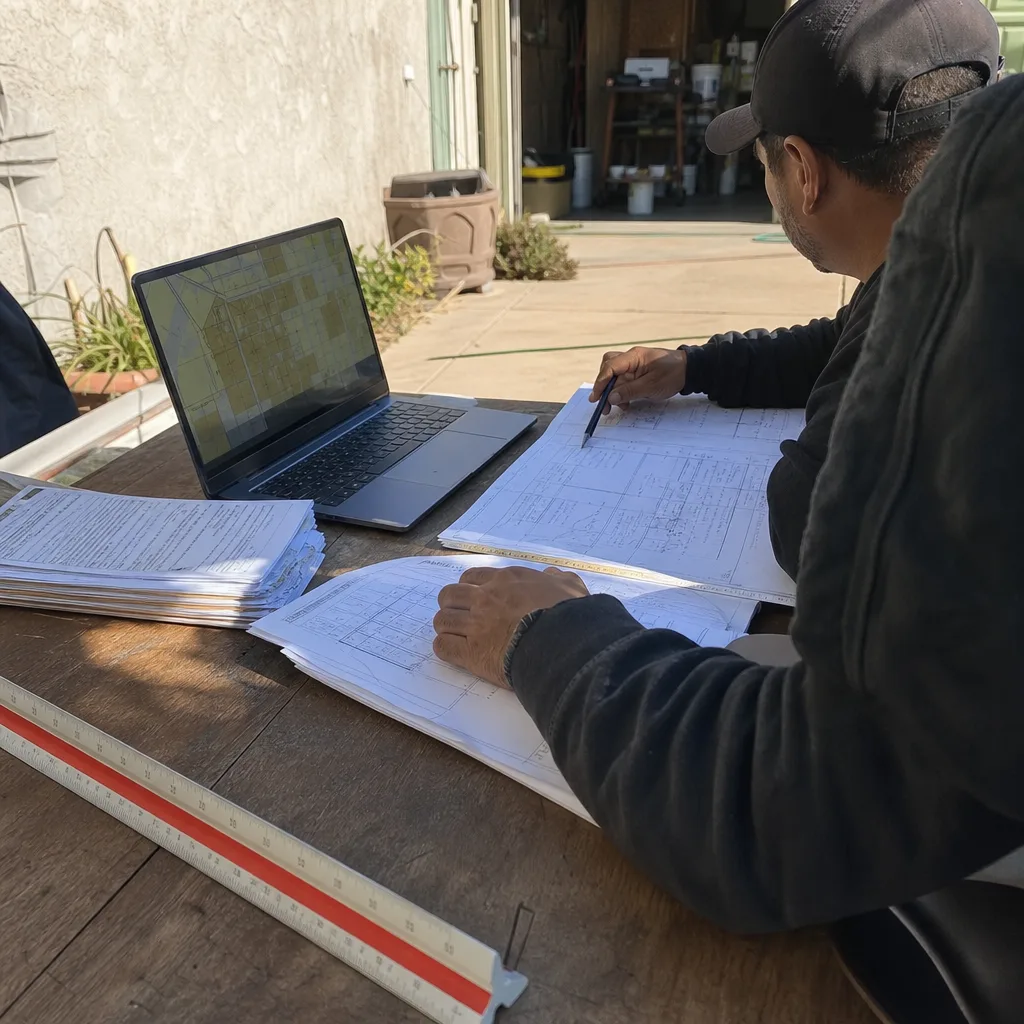
Lenders and appraisers verify ADU legality through a specific documentation chain. Missing links trigger re-inspections, appraisal assumptions that exclude the ADU, or loan denial. Prepare this package 60 days before listing or refinancing.
- Permit set with all approval stamps and plan check corrections. Include the response letter showing how each plan check comment was addressed.
- Final inspection card with every line signed and dated. If any inspection required re-inspection, include the correction notice and re-inspection sign-off.
- Certificate of Occupancy or Certificate of Completion. Ensure the address, APN, and unit designation match exactly.
- Assessor parcel record showing ADU square footage and unit count. Print the current record; do not rely on memory or prior year data.
- Utility account documentation showing separate or shared meter configuration. Lenders verify ADU utility independence for rental income qualification.
- HOA or CC&R compliance letter, if applicable. Some Lancaster subdivisions, particularly in master-planned communities near 30th Street West, have ADU restrictions that survive permitting.
- Photographic documentation of current conditions versus permitted plans. If you have modified the ADU since construction, disclose changes. Undisclosed modifications discovered at appraisal create liability.
Proactive step: Order a preliminary title report 30 days before listing. Title companies flag permit discrepancies that owners miss. Resolving them before buyer due diligence prevents price renegotiation or sale cancellation.
For garage conversion ADUs in Lancaster, add documentation of the original garage demolition and any foundation work. Appraisers sometimes question whether the conversion began with legal structure or unpermitted construction.
What Ellery Clients Receive: Haven Standard Post-Occupancy Documentation
Standard contractor handoffs vary. Some deliver keys and a verbal “you’re good.” Others provide a folder with scattered receipts. For more guides & resources on ADU ownership, visit our blog. The Haven Standard defines what documentation an ADU owner receives, when, and in what form. This is not marketing language. It is a written agreement, signed before work starts, with specific clauses governing post-occupancy deliverables.
Haven Standard Clause 7: Documented Closeout
Under Clause 7, every Ellery client receives:
- The complete stamped permit set, bound and digitally archived
- A final inspection summary with inspector names, dates, and any correction items
- The original Certificate of Occupancy or Certificate of Completion
- A written confirmation that the permitting authority has transmitted final data to the County Assessor
- A documented photo record of completed work, including roof, mechanical, electrical panel, and foundation conditions
The photo record is not a marketing gallery. It is dated, geotagged evidence of what was found and what was done, stored in a client-accessible portal. If an insurer disputes a claim years later, the photo record establishes pre-loss condition.
Haven Standard Clause 1: Written Price Before Any Work Starts
This clause governs the entire relationship, including documentation scope. The price for design, permitting, and construction is fixed in writing before any work begins. The documentation package described above is included in that price, not an add-on. There is no “call for a quote” - the quote is written, itemized, and binding.
Haven Standard Clause 9: 365-Day Done Right Promise
If the finished ADU is not built to the permitted drawings, Ellery makes it right. This includes documentation accuracy. If a permit record discrepancy is discovered within 365 days of CO issuance that stems from our closeout process, we correct it at our expense. This is not a generic warranty. It is a specific promise about documentation fidelity, backed in writing.
Since 2015, Ellery ADU Studio has designed, permitted, and built over 900 ADUs. Every project has included a written price before work started and a documented photo record at completion. The permit set is our core product, not an afterthought.
Prefab and Modular ADU Maintenance Considerations
Prefab and modular ADUs introduce documentation and maintenance categories that stick-built ADUs do not. Ellery specifies and coordinates systems from Abodu, Cover, Dvele, Mighty Buildings, Boxabl, Plant Prefab, Tuff Shed, and James Hardie. Each has distinct requirements.
Transport and Set Documentation
Modular ADUs arrive with a manufacturer’s certificate of compliance, transport documentation, and crane set records. These are not substitutes for local permits. They are additional documents. Maintain them with your permit package. Lenders sometimes request the manufacturer’s ICC-ES report or equivalent.
Abodu and Cover units, common in Lancaster’s infill market, arrive with pre-installed systems. The electrical and plumbing rough-in occurs in factory conditions. Final connection inspections still require local sign-off. Verify that your inspection card shows both “set” and “final connection” inspections, not just one.
Factory Warranty vs. Installation Warranty
Prefab manufacturers offer material and system warranties. These cover factory defects. They do not cover installation errors, foundation settlement, or local code compliance. The Haven Standard’s 365-Day Done Right Promise covers the integration: if the factory unit performs as specified but the installation created a gap, we address it.
Dvele and Mighty Buildings: Smart System Maintenance
Units with integrated smart home systems require firmware updates and connectivity verification. Annual maintenance should include manufacturer-recommended system checks. In Lancaster’s temperature extremes, verify that environmental sensors are calibrated correctly. A miscalibrated sensor can overcool in summer or underheat in winter, creating occupant complaints and utility cost disputes.
James Hardie Siding on Prefab and Site-Built ADUs
James Hardie fiber-cement products are specified across multiple prefab systems and most Ellery site-built ADUs in Lancaster. Maintenance is minimal but specific: keep ground clearance at 6 inches minimum, maintain sealant at all penetrations, and avoid power washing closer than 6 inches. The 30-year product warranty requires these conditions. Document your maintenance with dated photos to preserve warranty claims.
Common Mistakes to Avoid
- Treating the CO as the finish line. The certificate of occupancy is one step in a longer documentation chain. The assessor record update, utility account configuration, and title record correction all follow, and each can fail independently.
- Storing only paper copies. Lancaster’s fire risk is real. The 2020 Lake Fire burned structures within 15 miles of city limits. Paper permit files destroyed in fire or flood are difficult and expensive to reconstruct. Scan everything, back it up, and verify the digital files are readable annually.
- Assuming the contractor handled assessor notification. Most contractors consider their job complete at final inspection. Assessor data transmission is a separate administrative step that frequently lags or fails. Verify it yourself, in writing, 90 days after CO.
- Ignoring wind-season stucco checks. Small cracks become water intrusion paths during rare but intense rain events. In Lancaster’s freeze-thaw cycle (yes, winter nights drop below freezing), moisture in cracks expands and accelerates damage. Annual inspection prevents $8,000-$15,000 remediation.
- Using generic HVAC filter intervals. The “every 90 days” recommendation assumes moderate air quality. Lancaster’s particulate load requires 30-45 day intervals in peak seasons. Extended intervals degrade equipment and void some manufacturer warranties.
- Failing to disclose ADU modifications before listing. Kitchen reconfigurations, added windows, or bathroom upgrades after initial permitting create unpermitted work. Appraisers and inspectors find these. Disclosure and retroactive permitting protect your sale price and prevent post-closing liability.
- Neglecting backflow preventer certification. Lancaster’s cross-connection program requires annual testing for ADUs with separate irrigation or dedicated water service. Missed certification can trigger water service interruption and municipal fines.
When to Call a Professional
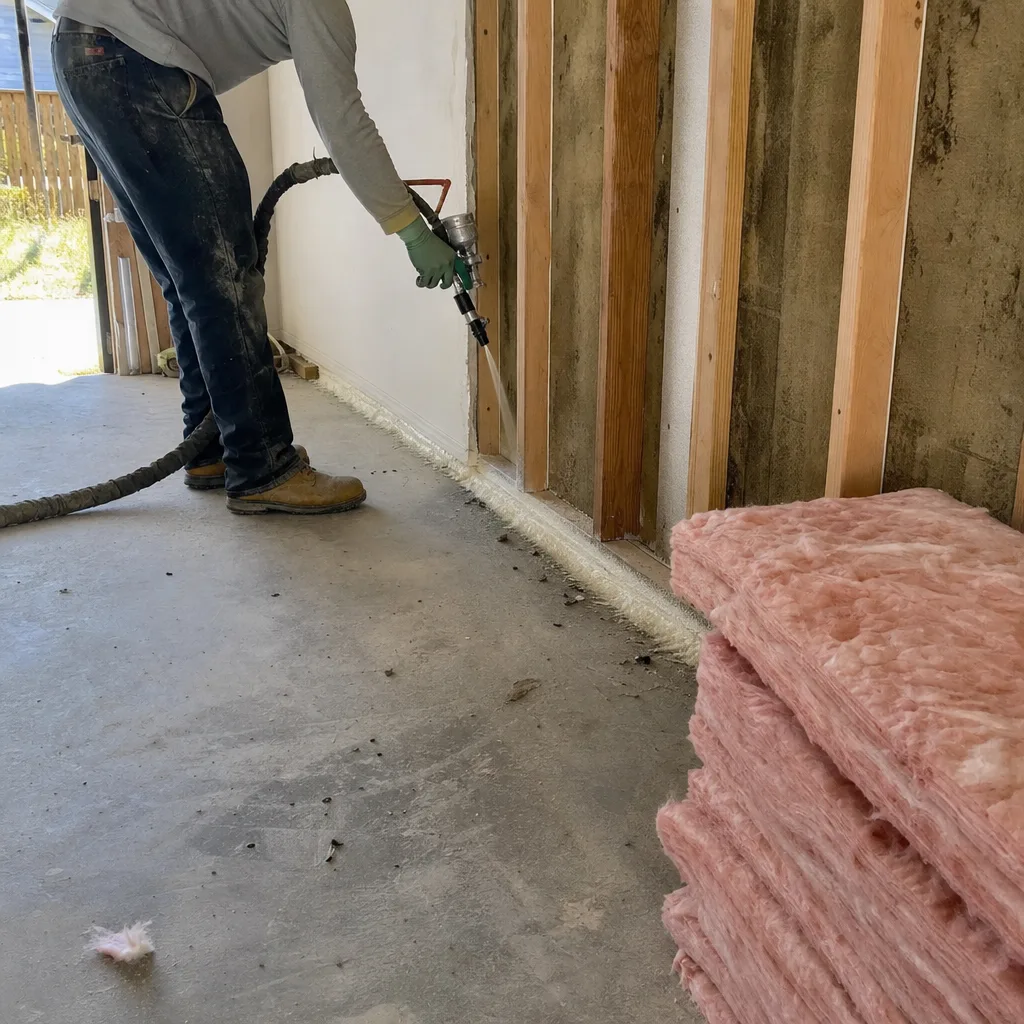
Some maintenance and documentation tasks are homeowner-manageable. Others require licensed expertise or create liability if done incorrectly. Call a professional when: your permit record audit reveals discrepancies you cannot resolve with the permitting authority directly; cracks exceed 1/16 inch or show stair-step patterns; HVAC performance degrades despite filter replacement; you are preparing to list or refinance within 90 days and have not verified assessor records; or your ADU uses a prefab system with smart home or factory-integrated systems requiring specialized service.
Ellery ADU Studio Lancaster offers free estimates for documentation review, maintenance assessment, and pre-listing verification. A live person answers calls 24/7. Call (661) 528-5298 to schedule.
Frequently Asked Questions
Simple clerical corrections, like a missing final inspection date, typically cost nothing if you provide documentation. Complex issues requiring permit amendments or re-inspection range from $800-$3,500 depending on the scope. Ellery ADU Studio Lancaster provides a Free Second Opinion on any written estimate for correction work. Call (661) 528-5298 for an exact assessment - estimates are free.
City of Lancaster permits expire 180 days after issuance if construction has not begun, with one 180-day extension available. LA County permits follow similar timelines. “Construction begun” typically means visible site work or foundation pour, not material delivery. Verify your permit’s expiration date and extension status if your project is delayed.
Check your property tax bill for “City of Lancaster” or “Unincorporated Los Angeles County.” Alternatively, use the LA County Registrar-Recorder’s district lookup tool by APN. The permitting authority, inspection jurisdiction, and some code requirements differ between the two. This distinction matters for every step in the checklist.
Annual maintenance tasks, filter replacement, and visual inspections are homeowner-appropriate. Permit record audits, backflow certification, and pre-listing documentation packages benefit from professional verification. The cost of a single missed discrepancy at refinance typically exceeds years of professional maintenance oversight. Ellery ADU Studio Lancaster structures documentation review as a standalone service for non-clients.
Lancaster’s sustained spring winds and Santa Ana events create cyclic loading on structures, accelerate sealant degradation, and drive particulate infiltration. Maintenance intervals for roofing, sealants, and HVAC filtration run 30-50% shorter than in coastal or sheltered inland cities. Budget accordingly and inspect after each major wind event.
The buyer’s lender will discover the discrepancy during due diligence. Typical outcomes: sale delay of 2-6 weeks for record correction, price renegotiation if the ADU must be excluded from appraisal, or sale cancellation if the buyer’s financing depends on ADU rental income. Pre-listing verification eliminates these risks.
The promise covers defects in construction relative to permitted drawings and errors in our closeout documentation process. If an Ellery client discovers within 365 days of CO issuance that a permit record was not properly transmitted due to our oversight, we correct it at our expense. This is specified in writing before project start, not a verbal assurance. For documentation issues originating from third parties, like assessor data entry errors, we assist with correction but cannot guarantee timelines outside our control.
The Bottom Line
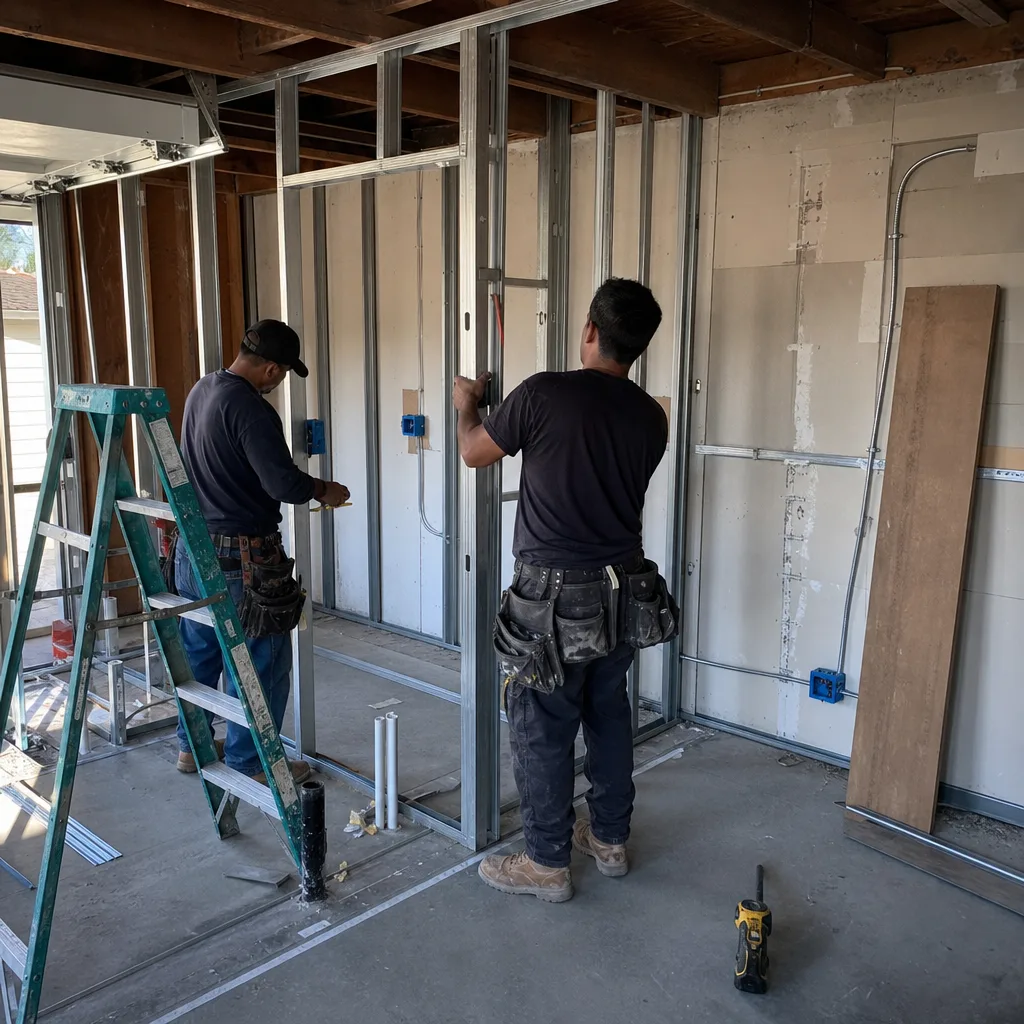
The ADU permit package is a living asset, not a filing-cabinet artifact. Lancaster’s high-desert climate, distinct permitting jurisdictions, and integration with LA County records create maintenance and documentation requirements that generic checklists miss. Hold four critical documents, verify your digital record annually, address climate-specific maintenance on shortened intervals, and prepare a complete documentation package before any sale or refinance. The homeowners who treat their permit set as an ongoing responsibility protect the value they built. Those who don’t discover the gaps when the cost is highest.
Written by Nadia Ellery, Owner at Ellery ADU Studio Lancaster, serving Lancaster since 2015.