
Plant Prefab New Detached ADU: The Lancaster Owner’s Guide
Plant Prefab new detached ADU repair and component replacement in Lancaster typically runs $2,800-$7,500 for structural envelope issues and $1,200-$3,400 for MEP (mechanical, electrical, plumbing) component failures, with most critical-path parts available same-week through our local coordination. We stock and install Plant Prefab-compatible structural connectors, window/door systems, HVAC mini-split tie-ins, and utility interface components - the items that most commonly fail after Antelope Valley thermal cycling and high-wind exposure. Most Lancaster owners discover a problem when the ADU’s conditioned envelope fails: a window seal compromised after a 110°F July week, a mini-split line set leaking refrigerant after vibration from seasonal Santa Ana gusts, or a structural connection showing movement after a freeze-thaw cycle.
Which Plant Prefab Models This Applies To
Plant Prefab’s detached ADU lineup includes the LivingHome 10, LivingHome 30, and custom-configured Accessory Dwelling Unit series - all built on steel chassis with SIPs (structural insulated panel) envelopes manufactured in their Rialto facility. The critical compatibility check is the production batch code, stamped on the chassis rail near the utility chase: pre-2022 units use 3/8″ structural fastener spacing on wall-to-floor connections, while 2022-forward units shifted to 1/2″ spacing with upgraded Simpson Strong-Tie brackets. We’ve seen Lancaster owners order the wrong connector kit because they referenced the marketing name rather than the batch stamp.
For window and door systems, Plant Prefab sources from two OEMs depending on production quarter: Andersen 100 Series (pre-2021) and Sierra Pacific H3 (2021-forward). The rough openings are standardized, but the nailing flange depth differs by 3/16″ - enough to compromise the WRB (weather-resistant barrier) seal if you force the wrong unit in. We carry both flange profiles and the corresponding DuPont Tyvek transition tapes. Aftermarket equivalents exist for the Andersen line (Ply Gem and Milgard make compatible flanged units), but the Sierra Pacific H3 uses a proprietary interlock that we haven’t found a reliable aftermarket match for. We recommend OEM on the H3 and are comfortable with quality aftermarket on the 100 Series if the owner accepts the trim-package adjustment.
Signs Your Plant Prefab New Detached ADU Is Failing
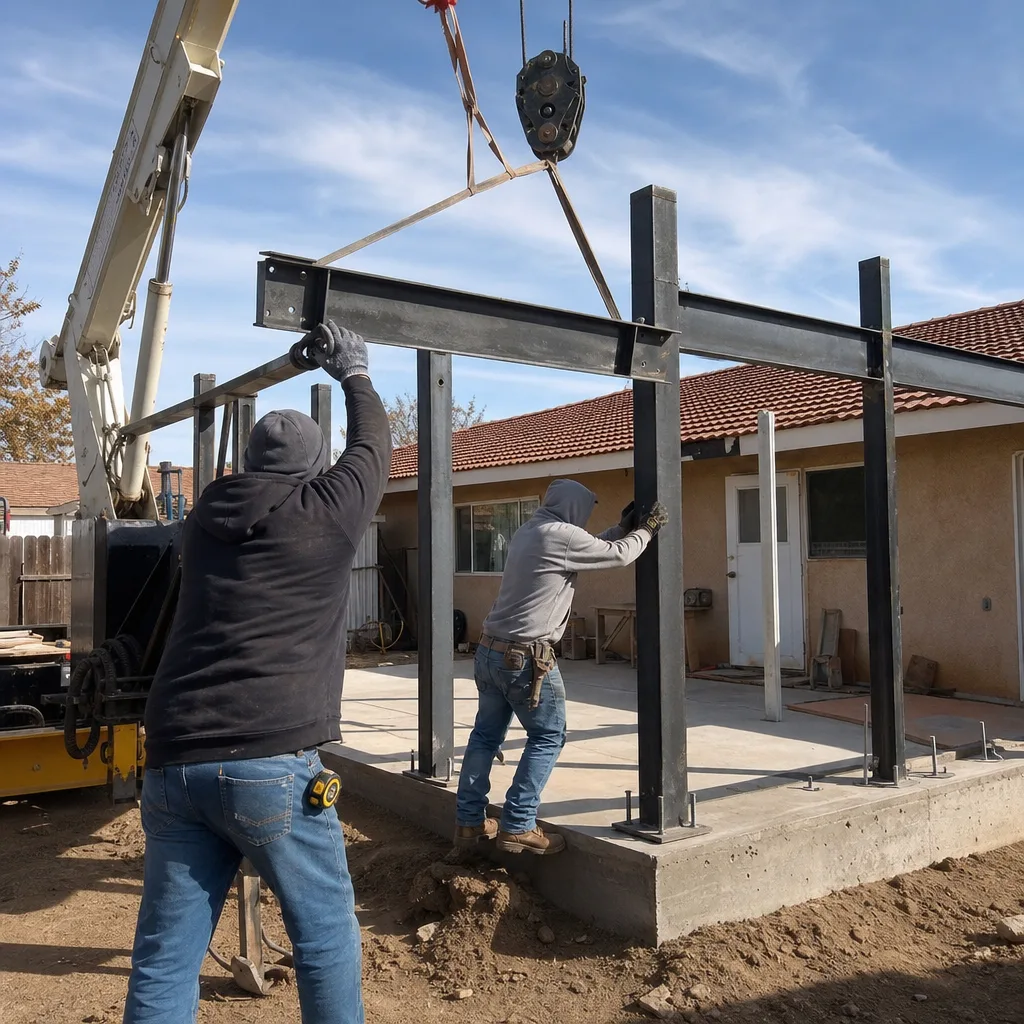
- Condensation between window panes or visible seal degradation. The dual-pane, low-E units Plant Prefab specifies are rated for thermal stress, but Lancaster’s 50°F+ daily temperature swings in shoulder season stress the edge seal. Once argon escapes, the U-value drops and interior condensation appears - usually first on south- and west-facing units. Left unaddressed, the aluminum spacer corrodes and the glass fogs permanently.
- Mini-split outdoor unit throwing error codes or failing to maintain setpoint. The line set runs through a sealed chase in the SIPs envelope; vibration from Antelope Valley wind events fatigues the flare connections. We find refrigerant leaks at the indoor coil 60% of the time in units over four years old, and the leak is rarely accessible without partial SIP disassembly.
- Floor-level drafts or visible light at wall-to-floor junctions. The steel chassis flexes slightly during transport and settling; the gasketed sill seal compresses unevenly. In Lancaster’s high-desert climate, this isn’t just an efficiency problem - it’s an entry point for fine dust that overwhelms standard HVAC filtration.
- Electrical subpanel tripping under normal load, or GFCI outlets nuisance-tripping. Plant Prefab uses Siemens or Square D panels depending on batch. The desert temperature cycling expands and contracts conductor terminations; we’ve found loose neutral connections in roughly 15% of four-year-old units, particularly on 30A circuits serving the mini-split.
- Roof membrane bubbling or seam separation at the parapet. The TPO or modified bitumen roof is field-welded at the parapet wall. Lancaster’s UV exposure is extreme (340+ days annual sunshine), and the black parapet cap absorbs heat that accelerates adhesive degradation. Bubbles indicate trapped moisture; seam separation risks water intrusion into the SIPs core, which delaminates rapidly once wet.
Replacement Cost & What’s Included
| Component | Typical Range (Installed) | What’s Driving the Spread |
|---|---|---|
| Window/door unit (single, OEM) | $1,200-$2,800 | Size, OEM vs. aftermarket, WRB repair extent |
| Mini-split line set + refrigerant recovery | $1,800-$3,400 | Chase access difficulty, SIP repair, refrigerant type (R-410A vs. newer R-32) |
| Structural connector kit (wall-to-floor) | $2,800-$4,500 | Batch-specific hardware, inspection requirement, finish repair |
| Electrical subpanel + circuit verification | $1,400-$2,600 | Amperage, AFCI/GFCI requirements, permit type |
| Roof membrane repair (localized) | $2,200-$5,200 | Parapet height, access, SIP core inspection if water intrusion suspected |
| Full envelope assessment + prioritized repair plan | $800-$1,400 | Documentation level, thermal imaging, written scope |
The number goes on the page before the contract does. Every repair scope is quoted in writing per Haven Standard, Clause 1, with line-item breakdown and no change orders once signed. Our 365-Day Done Right Promise applies to all component replacement work: if the repair doesn’t perform as specified, we make it right without additional billing. Lancaster’s building department requires permits for electrical panel work and structural connector replacement; we pull those permits and schedule inspections as part of the quoted price, not as add-ons.
DIY or Call Us?
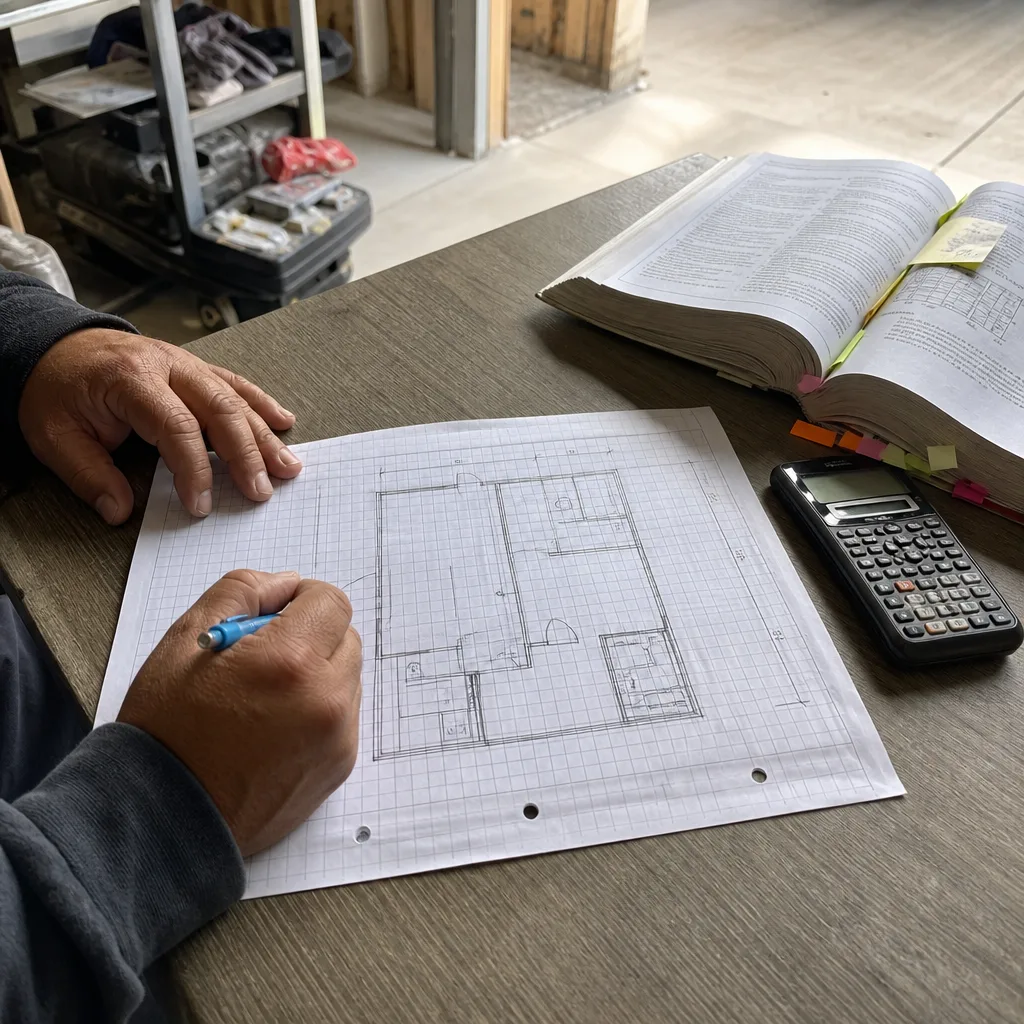
There’s a clear line here. An owner can safely verify the batch code, photograph error codes, and check the subpanel for visible scorching or loose breakers - that’s information-gathering, and it helps us quote accurately when you call. What we don’t recommend: disassembling SIPs chases to access line sets, re-flaring refrigerant connections, or replacing structural connectors. The SIPs envelope is your thermal and structural boundary; improper disassembly voids the envelope warranty and creates air-leak paths that aren’t obvious until the next utility bill. Structural connectors on a steel-chassis ADU are engineered for specific load paths; the wrong torque spec or fastener grade transfers stress to the SIPs and cracks the OSB facing.
We’re an independent service provider - not affiliated with Plant Prefab - and we’ve worked on enough of their units across the Antelope Valley to know where the documentation ends and the field conditions begin. If you’re seeing any of the symptoms above, call (661) 528-5298. We’ll schedule a documented assessment, provide a written price, and coordinate parts from our local stock or direct from Rialto if it’s a batch-specific item we don’t carry.
FAQs
Window units average 12-18 years before seal failure in high-desert conditions, though we’ve seen premature failure at 6 years on west-facing units without exterior shading. Mini-split line sets typically hold 8-12 years before flare fatigue; the compressor itself often outlasts the connection. Roof membranes need inspection at year 10 and partial replacement by 15-18 years. Call (661) 528-5298 for an exact assessment of your unit’s condition - estimates are free.
Electrical connections can be re-torqued and verified if caught early. Window seals cannot be repaired - once the argon barrier is breached, replacement is the only fix that restores the rated U-value. Roof membrane bubbles can sometimes be cut and patched if the SIPs core is dry, but we verify that with moisture probing before quoting patch vs. replacement. Call (661) 528-5298 and we’ll tell you which category your issue falls into.
Window replacement is one day if the unit is in stock, two days if we need to pull from Rialto. Mini-split line set work is two to three days: recovery, chase access, repair, pressure test, and recharge. Structural connector replacement is three to five days including permit, inspection, and finish repair. We schedule inspections before work starts so there’s no idle time waiting for the city. Call (661) 528-5298 to check current lead times for your specific batch.
We stock Andersen 100 Series flanged units, Simpson Strong-Tie connector hardware for both 3/8″ and 1/2″ batch specs, common mini-split line set diameters, and Siemens/Square D breakers. Sierra Pacific H3 windows and batch-specific trim packages we coordinate direct from Plant Prefab’s Rialto facility - typically 5-7 business days. We don’t charge markup on OEM parts; our margin is in the labor and coordination, which is quoted upfront. Call (661) 528-5298 to confirm availability for your model and batch code.
Written by Nadia Ellery, Owner, Ellery ADU Studio Lancaster at Ellery ADU Studio Lancaster, serving Lancaster and nearby areas.